
For software sales reps, getting in front of the C-suite can feel like the ultimate boss level. These decision-makers hold the budget, the vision, and the power to green-light your solution — or shut it down. But cracking the C-suite isn't about charm alone. It's about strategy, insight, and delivering executive-level value. Here's how to earn that seat at the table — and what to do when you finally get it.
Gaining access to the C-suite
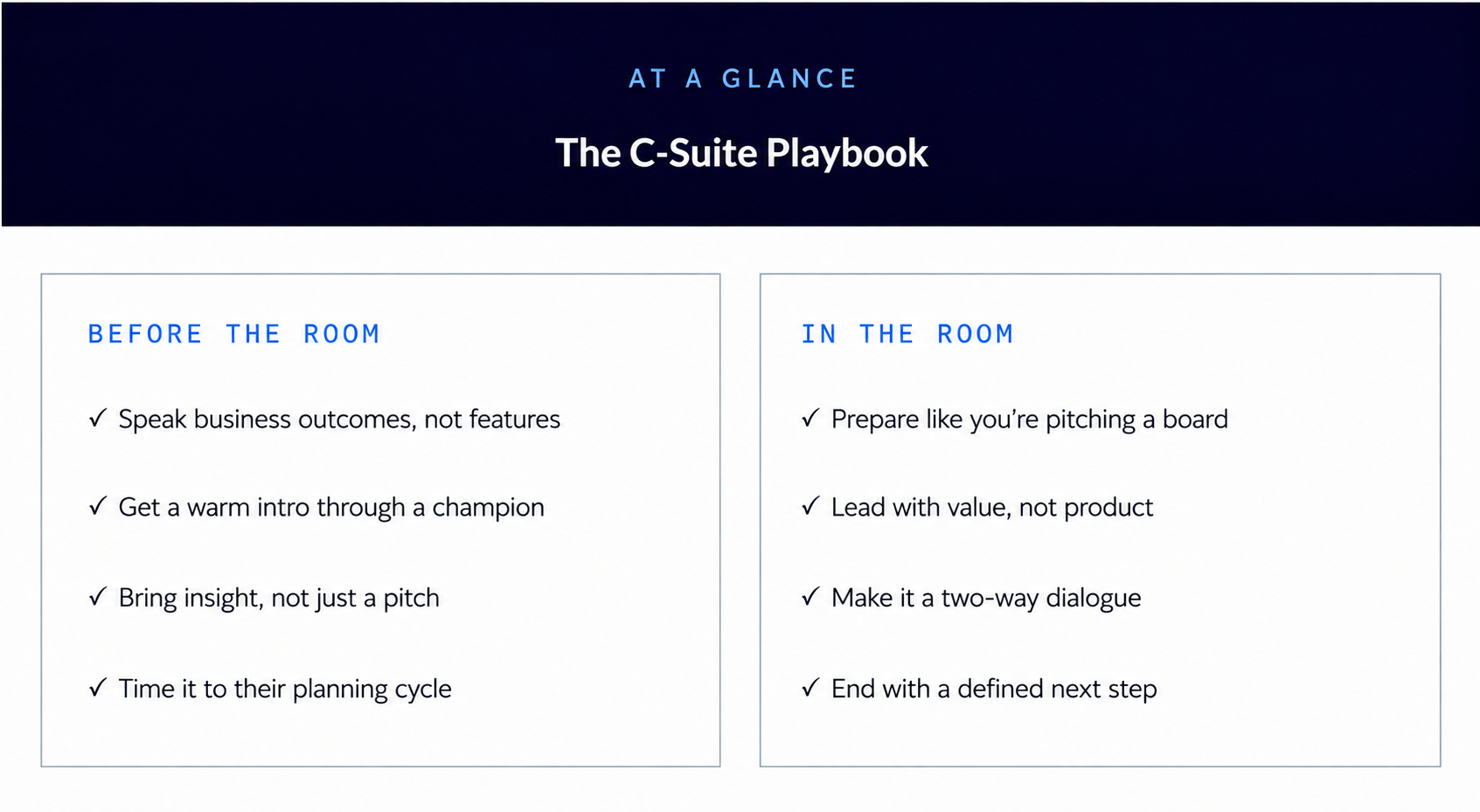
1. Speak the language of business outcomes
C-level executives don't buy features — they invest in outcomes. To catch their attention:
- Map your solution to strategic business drivers: revenue growth, cost savings, risk reduction, innovation.
- Use language that connects to metrics they care about (e.g., "reduce operational overhead by 15%," "accelerate time to market by 30%").
- Avoid technical jargon unless you're speaking with a technical executive (like the CTO or CISO).
2. Leverage your champions and influencers
Executives rarely take cold meetings — but they listen to trusted voices inside their org:
- Build strong relationships with mid-level stakeholders who experience the pain your solution solves.
- Ask for a warm introduction to an executive sponsor. Help your champion articulate why leadership should care.
- Offer to co-create the executive conversation with them — frame it as a partnership, not a handoff.
3. Earn your way up with insight selling
Executives pay attention to people who teach them something new:
- Bring market intelligence, competitive insights, or customer benchmarking data to the conversation.
- Tie trends to their business: "here's what we're seeing in your industry — and how others are adapting successfully."
- Share point-of-view content on LinkedIn to build a visible voice on topics execs care about.
4. Time it right
Executives are most open to conversations when:
- They're in planning or budgeting cycles.
- They've announced strategic changes (e.g., M&A, digital transformation, cost optimization).
- There's been recent turnover or a new executive hire — new leaders often re-evaluate vendors.
Use tools like LinkedIn Sales Navigator, news alerts, or earnings calls to track these signals.
What to do once you're in the room
1. Prepare like you're pitching a board
You may only get 15–30 minutes — make every second count.
- Research the company's strategic priorities, financials, org structure, and recent news.
- Tailor your message to their vertical, business model, and role.
- Come in with a hypothesis: "we believe we can help you reduce cloud spend by 20% without impacting velocity."
2. Lead with value, not product
This is not a demo. Start with their world, not yours:
- "Here's what we understand about your business priorities."
- "Here's what we're hearing from similar organizations."
- "Here's the impact our clients have achieved — and how we'd propose applying it to you."
3. Make it a two-way strategic dialogue
Executives don't want a pitch — they want perspective:
- Ask smart, open-ended questions: "how are you thinking about scaling that initiative this year?"
- Listen more than you speak, and echo back what you hear to demonstrate understanding.
- Be ready to challenge conventional thinking — respectfully.
4. End with a strategic next step
Don't leave without alignment or commitment:
- Propose a defined next step — "should we align with your SVP of Ops to discuss operational savings?"
- Get their permission to bring the broader buying committee into the next conversation.
- Offer to send a concise executive summary tailored to the conversation.
Final thoughts
Getting to the C-suite isn't about luck or title — it's about becoming a trusted advisor who brings strategic value. When you make the leap from vendor to partner, executives won't just take your call — they'll ask for your perspective. The reps who succeed in the enterprise game are the ones who don't just sell software — they sell outcomes, align to strategy, and act like peers to power.
Want to gauge if you're ready? Measure how prepared your company is to win enterprise customers with our Enterprise Revenue Index.